Sunday, January 6, 2008

mga Kapuso at Kapamilya, we win together as one! GMA Sports and ABS-CBN Sports Coverage of the 2007 Southeast Asian (SEA) Games in Nakhon Ratchasima, Thailand

"mga Kapuso at Kapamilya, we win together as one!"


"GMA Sports and ABS-CBN Sports' Coverage of the 2007 Southeast Asian (SEA) Games in Nakhon Ratchasima, Thailand"


The GMA Sports and ABS-CBN Sports' coverage of the 2007 Southeast Asian (SEA) Games in Nakhon Ratchasima, Thailand lasted from December 6 to 15, 2007.

As GMA and ABS-CBN along with ABC-5, PTV-4, RPN-9, QTV-11, IBC-13, Studio 23 and CLTV-36 served as the official Philippine broadcasters of the 2007 SEA Games in Nakhon Ratchasima, Thailand, it is the 24-hour non-stop sporting coverage without signing off broadcasting time.

Development and preparations

Broadcast giant GMA Network, Inc. announced on April 18, 2006 for the formal signing of contract between GMA Network, Inc., Philippine Olympic Committee (POC) and the Philippine Sports Commission (PSC) for the live television airing of 15th Asian Games in Doha, Qatar on December 1 to 15, 2006 and 2007 SEA Games in Nakhon Ratchasima, Thailand on December 6 to 15, 2007.

It feels like 1995 for GMA, when the network was branded as a "rainbow satellite" and its slogan was "Where You Belong." GMA was the official network of Pope John Paul II's visit to the 10th World Youth Day from January 12 to 16, 1995.


GMA and sister network QTV (owned by Citynet Network Marketing and Productions, Inc.) will air the games live as the two free-to-air television networks go 24 hours a day on June 14, 2006, in time for GMA's 56th anniversary. The station will spend on airing the two regional sports meets aside from the Manny Pacquiao fights for 2007. The final release of banners and pins and its official merchandise, as well as the radio and television plugs for the coverage to release in August as part of the official 100-day countdown to the 2007 SEA Games in Nakhon Ratchasima, Thailand, on December 6 to 15, 2007.

GMA: The Official Network banner for the 2007 SEA Games


GMA: The Official Network pin for the 2007 SEA Games


PLDT, Jollibee, Unilever, PAGCOR, and PCSO are the sponsors of the television coverage of the two regional games.

Mike Enriquez, Jessica Soho, Mel Tiangco, Jay Sonza, German Moreno, Angelique Lazo, Vicky Morales, Paolo Bediones, Tito Sotto, Ruth Cabal, Nelson Canlas, Arnold Clavio, Mickey Ferriols, Rovilson Fernandez, Mav Gonzales, Ralph Guzman, Rico Hizon, Carlo Ledesma, Jiggy Manicad, Ivan Mayrina, Benjie Paras, Miriam Quiambao, Lhar Santiago, Rhea Santos, Howie Severino, Connie Sison, Emil Sumangil, Valerie Tan, Jay Taruc, Raffy Tima, Mariz Umali, Iya Villania, Ryan Agoncillo, KC Montero, Suzi Entrata, Kara David, Luchi Cruz-Valdes, Ninna Castro, Lyn Ching, Gin de Mesa, Margaux Salcedo, Melissa Gecolea, Gigi Grande, Arnell Ignacio, Susan Enriquez, Jimmy Gil, Lala Roque, Mark Salazar, Melo del Prado, Joel Reyes Zobel, Tisha Silang, Antoinette Taus, Francis Magalona, Dingdong Dantes, Martin Andanar, Butch Francisco, Vic Sotto, Joey de Leon, Cacai Velasquez, Janno Gibbs, The Eraserheads, Jaya, Michael V., Side A, Verni Varga, Ricky Lo, Lolit Solis, Rudy Fernandez, Bobby Nalzaro, Tek Ocampo, Noly Calvo, Jeja Rose Pornan-Simeon, Orly Mercado, Connie Angeles, Susan Valdez, Mildred Ortega, Gina de Venecia, Rose Clores, Nonoy Zuñiga, Jimmy Santos, Jose Mari Chan and Dolphy situated from the Studio 2 of GMA Network Center and Westside Studio of GMA Broadway Centrum, they are wearing female dresses and male tuxedos provided by SM Department Store and male barong tagalogs provided by Kultura Filipino inside SM Supermalls.

Arnold Clavio and Jessica Soho anchored the papal visit coverage in January 1995 and January 2015.

GMA's 1992 logo without the words "Rainbow Satellite"

GMA broadcasts on 105 analog and digital free-to-air television stations all over the Philippines, broadcasting nationwide via the GMA Rainbow Satellite.


Luzon

  • GMA-7 Manila
  • TV-7 Batanes
  • TV-5 Laoag
  • TV-48 Vigan
  • TV-7 Abra
  • TV-11 La Union
  • TV-7 Tuguegarao
  • TV-13 Aparri
  • TV-30 Apayao
  • TV-9 Kalinga
  • TV-5 Mountain Province
  • TV-7 Santiago, Isabela
  • TV-13 Cauayan, Isabela
  • TV-21 Ilagan, Isabela
  • TV-5 Bayombong
  • TV-12 Quirino
  • TV-10 Baguio
  • TV-10 Dagupan
  • TV-5 Baler
  • TV-7 Cabanatuan
  • TV-35 Llanera
  • TV-10 Olongapo
  • TV-5 Botolan
  • TV-14 Iba
  • TV-10 Pampanga
  • TV-48 Tarlac
  • TV-3 Bagac
  • TV-27 Balanga
  • TV-30 Angat
  • TV-46 Malolos
  • TV-26 Obando
  • TV-12 Batangas
  • TV-26 Tagaytay
  • TV-15 Lucena
  • TV-48 Patnanungan
  • TV-23 Calamba
  • TV-26 San Pablo
  • TV-44 Jalajala, Rizal
  • TV-13 Occidental Mindoro
  • TV-11 Bongabong, Oriental Mindoro
  • TV-13 Boac, Marinduque
  • TV-5 Santa Cruz, Marinduque
  • TV-10 Torrijos, Marinduque
  • TV-12 Puerto Princesa, Palawan
  • TV-6 Brooke’s Point, Palawan
  • TV-8 Coron, Palawan
  • TV-17 Cuyo, Palawan
  • TV-13 Balabac, Palawan
  • TV-7 Romblon
  • TV-7 Masbate
  • TV-7 Naga
  • TV-8 Malilipot
  • TV-12 Legazpi
  • TV-13 Catanduanes
  • TV-2 Sorsogon
  • TV-8 Daet

Visayas

  • TV-5 Calbayog
  • TV-9 Catarman
  • TV-11 Catubig
  • TV-13 Catbalogan
  • TV-8 Borongan
  • TV-35 Naval, Biliran
  • TV-10 Tacloban
  • TV-12 Ormoc
  • TV-10 Capoocan, Leyte
  • TV-12 Isabel, Leyte
  • TV-44 Maasin
  • TV-2 Kalibo
  • TV-35 Malay, Aklan
  • TV-12 San Jose, Antique
  • TV-35 Culasi, Antique
  • TV-5 Roxas
  • TV-6 Iloilo
  • TV-9 Guimaras
  • TV-13 Bacolod
  • TV-23 Bais
  • TV-5 Cadiz
  • TV-30 Murcia, Negros Occidental
  • TV-7 Cebu
  • TV-26 Bogo
  • TV-11 Samboan
  • TV-11 Bohol
  • TV-5 Dumaguete
  • TV-11 Guihulngan
  • TV-48 Siquijor
  • TV-10 Sipalay

Mindanao

  • TV-41 Mambajao
  • TV-35 Cagayan de Oro
  • TV-30 Gingoog
  • TV-12 Bukidnon
  • TV-4 Dipolog
  • TV-34 Oroquieta
  • TV-5 Ozamiz
  • TV-3 Pagadian
  • TV-11 Iligan
  • TV-26 Butuan
  • TV-10 Surigao
  • TV-2 Tandag
  • TV-35 Bislig
  • TV-3 Prosperidad, Agusan del Sur
  • TV-5 Davao
  • TV-44 Tagum
  • TV-35 Panabo
  • TV-3 Digos
  • TV-13 Malita
  • TV-21 Baganga
  • TV-48 Mati
  • TV-30 Nabunturan
  • TV-6 Kidapawan
  • TV-12 Cotabato
  • TV-13 Marawi
  • TV-8 General Santos
  • TV-13 Koronadal
  • TV-30 Tacurong
  • TV-2 Ipil
  • TV-30 Imelda, Zamboanga Sibugay
  • TV-9 Zamboanga
  • TV-12 Jolo
  • TV-44 Tawi-Tawi

By August 1, 2007, the negotiations between media companies GMA Network, Inc. and ABS-CBN Corporation along with TV5 Network, Inc., People's Television Network, Inc. Radio Philippines Network, Inc., Intercontinental Broadcasting Corporation and Central Luzon Television together with the Philippine Amusement and Gaming Corporation (PAGCOR) and Philippine Sports Commission (PSC) to sign a contract for the live television airing of the 24th Southeast Asian Games in Nakhon Ratchasima, Thailand from December 6 to 15, 2007.


ABS-CBN, along with UHF channel Studio 23 and cable channel Balls, aired the countdown plugs and teasers for the live nationwide and worldwide coverage of the 24th Southeast Asian Games in Nakhon Ratchasima, Thailand on December 6 to 15, 2007.


Contract signing with ABS-CBN executives for the live coverage of the 2007 Southeast Asian Games in Nakhon Ratchasima, Thailand, on November 12, 2007, at Restaurant 9501, 14th floor, ELJ Communications Center in Quezon City. Spotted at the contract signing ceremony were Chairman, President and CEO Eugenio Lopez III, Chief Operating Officer for Broadcast Cory Vidanes, Integrated Corporate Communications Head Bong Osorio, Vice President for Sports Division Peter Musngi, Ambassador Marciano Paynor, Jr., Former Senator Vicente Sotto III, Solar Entertainment Corporation President and CEO Wilson Tieng, PAGCOR chairman Efraim Genuino, Philippine Olympic Committee chairman Jose Cojuangco, Jr., Tagaytay Mayor Abraham Tolentino and Philippine Sports Commission chairman William Butch Ramirez.


ABS-CBN, along with sister station Studio 23, rival networks GMA-7, PTV-4, ABC-TV5, RPN-9, Q-11, IBC-13, and CLTV-36, are the official Philippine broadcasters of the 2007 Southeast Asian Games in Nakhon Ratchasima, Thailand from December 6 to 15, 2007. It also broadcasts live nationwide and worldwide via satellite on all platforms - free-to-air television, AM radio, FM radio, and Internet via Facebook and YouTube on PCs, smartphones, and tablets.


The ABS-CBN's coverage of the 2007 SEA Games in Nakhon Ratchasima, Thailand can be seen simulcast live on all television stations of ABS-CBN all over the Philippines:
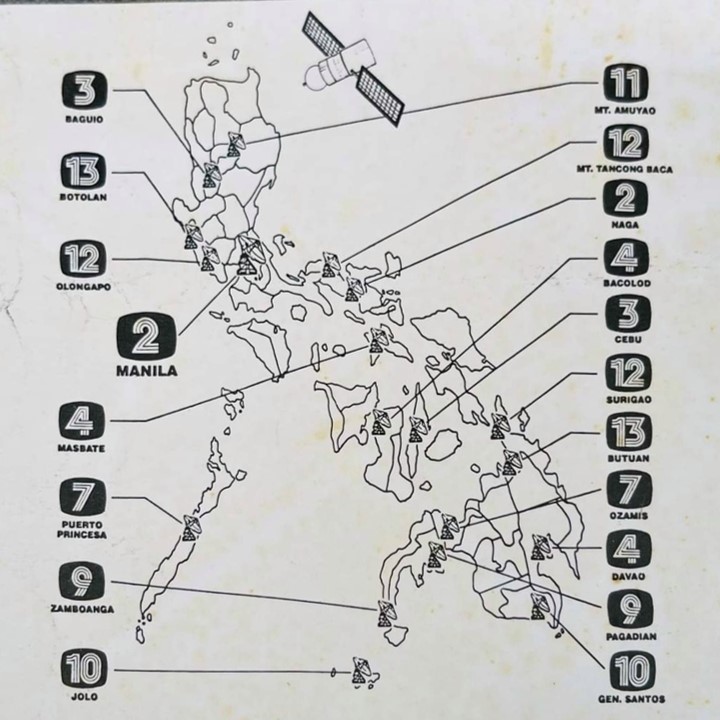


Luzon


  • ABS-CBN 2 Manila
  • TV-7 Laoag
  • TV-11 Vigan
  • TV-40 La Union
  • TV-32 Dagupan
  • TV-46 Alaminos
  • TV-11 Abra
  • TV-3 Baguio
  • TV-11 Mountain Province
  • TV-11 Batanes
  • TV-3 Tuguegarao
  • TV-9 Aparri
  • TV-2 Isabela
  • TV-11 Bayombong
  • TV-13 Cabarroguis
  • TV-6 Iba
  • TV-13 Botolan
  • TV-12 Olongapo
  • TV-22 Bataan
  • TV-46 Pampanga
  • TV-32 Tarlac
  • TV-34 Bulacan
  • TV-16 Malolos
  • TV-12 Meycauayan
  • TV-19 Obando
  • TV-32 Cabanatuan
  • TV-22 Baler
  • TV-40 Rizal
  • TV-6 Calamba
  • TV-46 San Pablo
  • TV-32 Tagaytay
  • TV-10 Batangas
  • TV-38 Lipa
  • TV-2 Lucena
  • TV-11 Occidental Mindoro
  • TV-21 Calapan
  • TV-7 Puerto Princesa
  • TV-10 Sofronio Española, Palawan
  • TV-12 Taytay, Palawan
  • TV-19 Brooke’s Point, Palawan
  • TV-5 Coron, Palawan
  • TV-21 Cuyo, Palawan
  • TV-7 Balabac, Palawan
  • TV-52 Kalayaan, Palawan
  • TV-11 Roxas, Palawan
  • TV-12 Taytay, Palawan
  • TV-9 Romblon
  • TV-10 Daet
  • TV-11 Naga
  • TV-8 Iriga
  • TV-7 Catanduanes
  • TV-4 Legazpi
  • TV-10 Tabaco
  • TV-10 Masbate
  • TV-7 Sorsogon


Visayas


  • TV-10 Iloilo
  • TV-9 Kalibo
  • TV-21 Boracay
  • TV-44 Antique
  • TV-21 Roxas
  • TV-4 Bacolod
  • TV-8 Bais
  • TV-40 Murcia
  • TV-7 Cadiz
  • TV-26 Sipalay
  • TV-3 Cebu
  • TV-2 Toledo, Cebu
  • TV-13 Barili, Cebu
  • TV-7 Siquijor
  • TV-9 Bohol
  • TV-12 Dumaguete
  • TV-13 Biliran
  • TV-2 Tacloban
  • TV-5 Catarman
  • TV-7 Catbalogan
  • TV-10 Calbayog
  • TV-38 Borongan


Mindanao


  • TV-42 Dipolog
  • TV-11 Pagadian
  • TV-5 Ipil
  • TV-3 Zamboanga
  • TV-2 Cagayan de Oro
  • TV-47 Mambajao
  • TV-2 Malaybalay
  • TV-4 Iligan
  • TV-7 Ozamiz
  • TV-2 Marawi
  • TV-11 Butuan
  • TV-12 Surigao
  • TV-26 Tandag
  • TV-2 Bislig
  • TV-5 Agusan del Sur
  • TV-4 Davao
  • TV-24 Mati
  • TV-23 Baganga
  • TV-11 Malita
  • TV-50 Tagum
  • TV-46 Nabunturan
  • TV-3 General Santos
  • TV-4 Koronadal
  • TV-7 Alabel
  • TV-4 Kidapawan
  • TV-5 Cotabato
  • TV-10 Jolo
  • TV-42 Tawi-Tawi


The 24th Southeast Asian Games were held in Nakhon Ratchasima, Thailand, from December 6 to 15, 2007.


The title of the coverage of the 2007 SEA Games in Nakhon Ratchasima, Thailand is A Time for Heroes, produced by production company Airtime Marketing Philippines, Inc., sports divisions ABS-CBN Sports, GMA Sports, ABC Sports, Solar Sports, and pan-Asian pay television network ESPN Asia and aired on ABS-CBN, PTV, ABC, GMA, RPN, QTV, IBC, Studio 23 and CLTV.


The live television coverage of the 2007 SEA Games in Nakhon Ratchasima, Thailand, was aired by the Philippines' ABS-CBN, People's Television Network (PTV), Associated Broadcasting Company (ABC), GMA Network, Radio Philippines Network (RPN), Quality Television (QTV), Intercontinental Broadcasting Corporation (IBC), and Central Luzon Television (CLTV) in partnership with Airtime Marketing Philippines, Inc. and cable sports television network ESPN Asia. During the nine days of the regional sporting event, the said free-to-air television networks preempted regular programming in the morning, afternoon, and evening to give way for the coverage.

TV network resident announcer Peter Musngi, Lloyd Oliver Corpuz, Eric Galang, also known as Chinapaps, Al Torres, Shirley Escalante, Dennis Antenor, Jr, and Yuel Reyes, are doing the 100-day countdown promotional plug for the 2007 SEA Games in Nakhon Ratchasima, Thailand, while Paolo Abrera, Jenny Almazan, Lia Andanar-Yu, Lyza Aquino, Sol Aragones, Julius Babao, Gerry Baja, Dr. Carl Balita, Bro. Jun Banaag, Phoemela Baranda, Maricar Bautista, Cito Beltran, Jeff Canoy, Raya Capulong, Jorge Carino, Jing Castaneda, Angelo Castro, Jr., Willard Cheng, Ginger Conejero, Karmina Constantino, Nina Corpuz, Cheryl Cosim, RG Cruz, Ron Cruz, Bea Cuadra, Karen Davila, Karen de Guzman, Vic de Leon Lima, Katrina Domingo, Ces Drilon, Mario Dumaual, Alvin Elchico, DJ Richard Enriquez, Ted Failon, Gretchen Fullido, Gigi Grande, Agatha Gregorio, Pia Gutierrez, Mico Halili, Paul Henson, Zen Hernandez, Pia Hontiveros, Jon Ibanez, Mon Ilagan, Paige Javier, Lynda Jumilla, Ed Lingao, Maan Macapagal, Twink Macaraig, Johnson Manabat, Tina Monzon-Palma, Henry Omaga-Diaz, Apa Ongpin, Patrick Paez, Stanley Palisada, Jekki Pascual, Amy Perez, Anton Roxas, Kaxandra Salonga, Korina Sanchez, Marlo Sanchez, Alex Santos, Lexi Schulze, Bernadette Sembrano, Boyet Sison, Christopher Sitson, Anthony Taberna, Sherrie Anne Torres, Nadia Trinidad, Bill Velasco, Tony Velasquez, Freddie Webb, Pinky Webb, Luis Pantoja, Mike Navallo, Angel Movido, Ryan Ang, Ina Reformina, and DJ Chacha situated at the Studio 7 of the ABS-CBN Broadcasting Center, Mike Enriquez, Jessica Soho, Mel Tiangco, Jay Sonza, German Moreno, Angelique Lazo, Vicky Morales, Paolo Bediones, Tito Sotto, Ruth Cabal, Nelson Canlas, Arnold Clavio, Mickey Ferriols, Rovilson Fernandez, Mav Gonzales, Ralph Guzman, Rico Hizon, Carlo Ledesma, Jiggy Manicad, Ivan Mayrina, Benjie Paras, Miriam Quiambao, Lhar Santiago, Rhea Santos, Howie Severino, Connie Sison, Emil Sumangil, Valerie Tan, Jay Taruc, Raffy Tima, Mariz Umali, Iya Villania, Ryan Agoncillo, KC Montero, Suzi Entrata, Kara David, Luchi Cruz-Valdes, Ninna Castro, Lyn Ching, Gin de Mesa, Margaux Salcedo, Melissa Gecolea, Arnell Ignacio, Susan Enriquez, Jimmy Gil, Lala Roque, Mark Salazar, Melo del Prado, Joel Reyes Zobel, Tisha Silang, Antoinette Taus, Francis Magalona, Dingdong Dantes, Martin Andanar, Butch Francisco, Vic Sotto, Joey de Leon, Cacai Velasquez, Janno Gibbs, The Eraserheads, Jaya, Michael V., Side A, Verni Varga, Ricky Lo, Lolit Solis, Rudy Fernandez, Bobby Nalzaro, Tek Ocampo, Noly Calvo, Jeja Rose Pornan-Simeon, Orly Mercado, Connie Angeles, Susan Valdez, Mildred Ortega, Gina de Venecia, Rose Clores, Nonoy Zuñiga, Jimmy Santos, Jose Mari Chan and Dolphy was at the Westside Studio of GMA Broadway Centrum and Studio 2 of GMA Network Center, Deo Macalma, Angelo Palmones, Dely Magpayo, Joe Taruc, Andy Verde, Ruth Abao, Malou Cabral, Morly Alinio, Bing Formento, Regi Espiritu, Rey Sibayan, Rommel Fuertes, Edmar Estabillo, Florante Rosales, Dennis Antenor, Jr., Sherwin Alfaro, Dr. Cesar Chavez, Prof. Dody Lacuna, Atty. Cherryl Adami-Molina, Atty. Dodo Dulay, Boy Gonzales, Val Gonzales, Atty. Rica Herra, Thea Pecho Corpuz, JV Ejercito, Teddy Boy Locsin, Atty. Boying Remulla, Henry Uri, Karen Ow-Yong, Jana Abejero, Niño Padilla and Atty. Rhina Seco from the MBC Media Group (MMG) Building, Star City, Vicente Sotto Street, Cultural Center of the Philippines Complex, Roxas Boulevard, Pasay while the color commentators reporting live from Nakhon Ratchasima, Thailand were Marco Benitez, Migs Bustos, Dyan Castillejo, Sam Coloso, Sam Corrales, Sydney Crespo, Apple David, Paolo del Rosario, Andrei Felix, Pauline Gaston, Boom Gonzales, Martin Javier, Ian Laurel, Cesca Litton, Gianna Llanes, Chino Lui Pio, Gretchen Malalad, TJ Manotoc, Angelique Manto, Rox Montealegre, Marc Nelson, Mozzy Ravena, Anne Remulla-Canda, Mikee Reyes, Tricia Robredo, Lance Santiago and Sharon Yu and sports correspondents Gretchen Ho, Renz Ongkiko, Chiqui Roa-Puno and Chino Trinidad.

"Fight for SEA Games crumbs under way."

Peping sees Thai victory, Philippine athletes check in

By Ernesto A. Gonzales, Sports Feature Editor
Published on page A29 in the December 6, 2007 issue of the Philippine Daily Inquirer

Nakhon Ratchasima—At least, the overall winner of the two preceding Southeast Asian Games started to shape up midway through the competition.

This time, however, everybody acknowledges a runaway victory for host Thailand—long before the opening of the 24th edition of the Games, which is set for Thursday at the main stadium of the Nakhon Ratchasima Sports Competition Center here.

"There's no way they're going to lose. It's the birthday of their King," said Philippine Olympic Committee president Jose "Peping" Cojuangco, Jr., who led the first big batch of 591-strong Philippine contingent that arrived here Tuesday

"The fight is for second place."

It was an uninspiring but realistic assessment of the Filipinos' chances in this biennial sports festival which they finally dominated for the first time two years ago on their third stint as hosts.

Like Vietnam, which prevailed in 2003 while setting a record of sorts as the first home team to win on its first hosting stint, the Philippines did not emerge as a serious title contender until after the first few days of competition.

This time, Thailand, the overall runner-up in the last two editions, has been awarded the championship. And it could yet serve as the highlight of the nation's year-long celebration to mark the 80th birth anniversary of King Bhumibol Adulyadej.

The King, who occupies a revered place in the history of the competitio,n was a sailing champion of the Games when it was still known as the Southeast Asian Peninsular Games until 1977-celebrated his birthdayon  Wednesday.

With action going full blast here and in Bangkok and Pattaya on Friday, the Thais are already in command with 18 golds, 19 silvers, and seven bronzes in shooting. Singapore was in second with 10 golds, followed by Vietnam with eight victories and Malaysia and Myanmar with two each.

Meanwhile, a 139-man group headed by Philippine Sports Commission chair William "Butch" Ramirez, and including 51-man athletics contingent and the women's basketball team, planed in Wednesday. The third and largest group of 155 will check in on  Thursday.

After winning 113 golds in 2005 on top of 84 silvers and 94 bronzes, the Philippines hopes to win at least 485 events to be disputed in 42 sports to secure second place over Vietnam.

Admittedly not as prepared as in 2005, when the president's husband, Jose Miguel Arroyo, raised P 160 million to fund their training, the Filipinos hope to somewhat make it a merry Yuletide season with victories in, among others, both divisions of basketball, which was not held two years ago because the country was under FIBA suspension.

The Filipinos also look forward to churning out outstanding efforts in the pool when Erica Totten, Jaclyn Marissa Pangilinan and Maria Georgina Gandionco will go for Olympic berths; in billiards where Asiad champion Antonio Gabica joins former world 9-ball king Ronnie Alcano and other traditionally rich medal sources like taekwondo, boxing, wushu, traditional boat race and athletics.

The Philippine women's football team took a 0-10 beating at the hands of Vietnam and put its fate in the hands of defending champions.

Joey Berba finished second in the seeding run of mountain cycling behind a Thai, while the two sepak takraw squads in the hoop event were in the middle of the pack after Wednesday's initial action.

The men's team of Danilo Alipan, Harrison Castanares, Joel Carbonilla, Hector Mencarion, and Metodio Suico, Jr. was fourth after two rounds. At the same time, the women's squad of Irene Apdon, Desere Autor, Sarah Jane Catain, Gelyn Evora, and Rhea Padrigo also held forth.

The Opening Ceremony will be held on Thursday at 6 p.m., with Crown Prince Maja Vajiranlongkorn as the guest of honor.

"Missing forms delay Philippine bets in Bangkok"

By Musong R. Castillo
Published on page A29 in the December 6, 2007 issue of the Philippine Daily Inquirer

Nakhon Ratchasima- Several Filipino athletes, part of a big 151-athlete wave to arrive here for the 24th Southeast Asian Games, were held for more than three hours at the Bangkok International Airport on Wednesday because of a mix-up with the local accreditation force.

Photos and application forms needed for the athletes' accreditation could not be found, and the Reception and Protocol Committee of the Games scrambled to give them identification cards at the last minute.

At the Philippine International Convention Center in CCP Complex, Roxas Boulevard, Pasay, Metro Manila, some of the local media journalists needed for accreditation.

That development delayed the Filipinos' arrival at the Olympic Village on the Suranaree University of Technology campus. They checked into the village well into the night.

Members of the Philippine secretariat, led by Eleanor Navarro and Queenie Evangelista, facilitated the acquisition of new accreditation passes for the athletes, who touched down at the Bangkok airport together with Philippine Sports Commission chairman William "Butch" Ramirez.

Ramirez, who was whisked away by the VIP welcoming committee, was the second top sports official after Philippine Olympic Committee president Jose "Peping" Cojuangco.

Cojuangco planed in with more than 140 athletes and officials on Tuesday. They arrived in Korat about 10 p.m. (11 p.m. Manila time).

Update: 

"Kahit walang tulugan dito sa PICC, mga kasapi ng media mananatili dito sa Sofitel Philippine Plaza hanggang sa pagtatapos ng 24th Southeast Asian Games sa ika-15 ng Disyembre. Sinusubokan namin na ma-contact ng GMA News." - from Saksi, December 6, 2007 episode

On December 6, 2007, few hours before the live airing of opening ceremony of the 24th Southeast Asian Games in Nakhon Ratchasima, Thailand, some of them who spotted at the central atrium fronting H&M, SM Mall of Asia are SM Prime Holdings, Inc. president and CEO Hans Sy, SM Supermalls president Annie Garcia, Steven Tan, some executives from PLDT, Smart, Maynilad, Meralco, Facebook, Friendster, Multiply, Myspace, Twitter, Tumblr and YouTube, barangay officials and residential families from Pasay, Paranaque, Las Pinas, Bacoor in support of Filipino athletes during the 2007 SEA Games in Nakhon Ratchasima, Thailand.

SM Prime Holdings, Inc. president and CEO Hans Sy

SM Supermalls president Annie Garcia

In an interview before the live airing of the opening ceremony, Sy told reporters, "They arrived earlier between 11 a.m. from their homes in Manila (districts of Malate, Ermita, San Andres), Pasay, Paranaque, Las Pinas and Bacoor to watch the opening ceremony of the 24th Southeast Asian Games in Nakhon Ratchasima, Thailand. Some of them trooped to the activity center of SM malls nationwide."

Inquirer Lifestyle Series: Fitness.Fashion with Samsung fashion show's guest model Enchong Dee before the in the finals of men’s 100-meter butterfly and he was placed eighth in the finals with the time of 56.87 seconds during the 2007 Southeast Asian Games swimming events in Nakhon Ratchasima, Thailand last Sunday, December 9, 2007. Photos: Louise Gandionco-David/Multiply.com and courtesy of Bench

December 8 to 9, 2007 and December 11 to 12, 2007, During a five-day swimming competition for the 24th Southeast Asian Games in Nakhon Ratchasima, Thailand with national swimmer and then University of California swimmer Miguel Molina and the fashion show's guest model turned De La Salle University (DLSU) Green Tankers member Ernest Lorenzo "Enchong" Dee, the Pia Cayetano-Paolo Abrera-Marco Protacio affair and the riots at Dee residence in Barangay Horseshoe, Quezon City. A 25-hour overnight vigil was held at the Greenbelt Chapel in Makati City, held on the same day starting at 7:00 p.m. and ending at 8:00 p.m. of the same day. Dee was in the finals of men's 100-meter butterfly last December 9 and lane 1 of men's 200-meter butterfly finals last December 11, 2007. He was the eighth place finisher in the said event with a time of 2 minutes, 11.47 seconds, and he lost to Filipino-American James Bernard Walsh.


A re-run of the August 21, 1983, assassination of former senator Benigno Aquino, Jr. aired by GMA Network. (In 1983, Channel 7 was the first to break the news of Ninoy Aquino's death, and later would be the only television station to broadcast his funeral.)


The video conversation starts with the sound of the plane landing and people talking among themselves.
  • “Everybody remains on board,” one of them says.
Moments later, a single gunshot rings out, and women are wailing.
  • “What happened? What was that?” a woman’s voice asks.
  • More gunshots. The wailing becomes louder.
  • Then an order from several men: “Inside, inside, inside!”
  • “The soldiers… shot Ninoy. He’s dead out there,” a woman cries out.
Burton’s tape records faintly the sound of someone saying, “Eto na (This is it).” Footage shot by a foreign TV crew captures the words now familiar to Filipinos who lived through the events surrounding the Aquino assassination. “Eto na, eto na! Ako na, ako na! Op! Pusila, pusila (This is it, this is it! Let me let me! Shoot, shoot)!”

And then, the gunshot.

What is significant about the tape are the reactions of Aquino’s fellow passengers and the conversations Burton had with them.

Burton apparently kept recording as she discussed with fellow foreign journalists what happened.

Some eight minutes into the tape, Burton is heard saying, “It’s very confusing, I mean, I don’t know.” She then answered more questions from someone who sounded like an American.
  • Man: “They shot Ninoy?”
  • Woman, presumably Burton: “Yeah.”
  • Man: “Where?”
  • Burton: “Right at the bottom of the stairs.”
  • Man: “When Ninoy was still on it or when…”
  • Burton: “No, when he got off. I’m sure he’s dead.”
The tape also captures Burton and her fellow passengers after they had disembarked and ran into people waiting to meet the passengers from the China Airlines flight.

Local journalists who covered the airport at the time had been herded by military men to the entrance to the tube where they were to await Aquino. When they learned of the commotion on the tarmac, they interviewed the disembarking passengers to ask them what happened.

One conversation was that of Burton and a Filipino.
  • Man: “What did you see? Who did it?”
  • Burton: “Soldiers.”
  • Man: “How many of them?”
  • Burton: “I don’t know. I think we’d better wait.”
  • Man: “Did you recognize him? Aquino?”
  • Burton: “Yeah.”
  • Man: “What’s your name?”
  • Burton: “No, I’m not gonna… this is not the place to talk. We had just seen two assassinations take place right outside our window.”

The tape then records what sounded like Burton comparing notes with fellow foreign correspondents, everyone recalling what they heard and trying to reconstruct the moments when they listened to the shorts.

In one portion of the tape, the conversation turns to who killed Aquino, and Burton points out that a Japanese reporter had seen one of the men in khaki, referring to one of Aquino’s escorts, being the gunman.

But a man contradicts her, saying, “I did not see a man in khaki uniform shoot Aquino.” To this day, the question of who shot Aquino remains subject to debate.

Three personalities along with Samson, Reyes, Claparols, and Eala stayed in the same place for the said event for fifteen days between December 6 to 15, 2007, followed by her father former Philippine Senator Rene Cayetano's 73rd birthday celebration on December 12, 2007, and the welcome the new millennium 2008 between December 31, 2007, and January 1, 2008.

December 12, 2007, one of Enchanted Kingdom's attractions, the Space Shuttle roller coaster, stalled between the tracks, where school children from Bulacan, Laguna, and Batangas were included.

Makalipas na walong taon, kamusta pa ba ang aktor at dating pambansang atleta na si Enchong Dee pagkatapos ng 2007 SEA Games swimming competition sa Nakhon Ratchasima, Thailand noong ika-7 hanggang ika-11 ng Disyembre 2007, 2008 ASEAN University Games sa Kuala Lumpur, Malaysia noong ika-11 hanggang ika-21 ng Disyembre 2008 at 2009 UAAP swimming championships noong Setyembre 24 hanggang 27, 2009 sa Trace Aquatic Center sa Los Banos, Laguna, siya ay naging contestant sa reality show na Pinoy Big Brother na may edisyon na "737" noong Hunyo 2015 at host ng reality show na Pinoy Big Brother na may edisyon na "Gen 11" noong Hulyo 2024 at "Celebrity Collab Edition" noong Marso 2025. 

(Eight years later, how is actor and former national athlete Enchong Dee after the 2007 SEA Games swimming competition in Nakhon Ratchasima, Thailand on December 7 to 11, 2007, 2008 ASEAN University Games in Kuala Lumpur, Malaysia on December 11 to 21, 2008 and 2009 UAAP swimming championships on September 24 to 27, 2009 at the Trace Aquatic Center in Los Banos, Laguna, he became a contestant on the reality show Pinoy Big Brother with the "737" edition in June 2015 and host of the reality show Pinoy Big Brother with the "Gen 11" edition in July 2024 and "Celebrity Collab Edition" in March 2025.)


“Unbelievable” is the reply of actor and former UAAP athlete Enchong Dee when asked how he was able to divide his time between his showbiz career, his training, and his studies at DLSU.

It was not easy. There were days that Dee would go without sleep, from taping to the pool just to train. From there, he would go straight to class. But all the hard work paid off in 2007, 2008, and 2009 when he picked up three consecutive MVP awards. In 2009, the 20-year-old actor was honored by the La Salle community for bagging his third MVP trophy and seven gold medals—in the 1,500-meter and 800-meter freestyle, 400-meter and 200-meter individual medley, 200-meter, 100-meter and 50-meter butterfly—thereby powering the DLSU men’s swimming team to it’s first title since 2002.

It was unbelievable, but not impossible. Dee thinks the biggest factor in his success was his ability to manage his time. “I would ask permission from my professors, coaches, and directors,” he says. “I always believe that to have a proper approach to something, it’s important to keep communication lines open. Be straight to the point, but make sure nothing is compromised.”

He misses being part of the UAAP, especially now that he is no longer actively training. Dee is now exclusively devoted to his showbiz career. His latest movie, I Do, in which he starred opposite Erich Gonzales, did well at the box office, and he has several projects lined up. “I miss it [UAAP], especially the preparation,” he says. “I would train with my teammates every morning before going to class. It’s fulfilling when I look back and realize how hard we worked, and how harmonious we moved as a group.”

The win was also memorable because he would see kids look up to him and say they wanted to be like him one day. For Dee, being in a position to inspire other people was one of the best things about being part of the UAAP.

The values he learned in competition—“discipline towards work, perseverance toward a goal, teamwork among my co-workers, working hard and having passion for what I do”—are values that will serve him even now that he is, as they say, “out of the water”.


Epilogue


"In my proposed diary regarding my re-enactment of episode 3, part 3, sequence 1 of Your Song presents Boystown, shot on location at the Olympic-size swimming pool of Makati Aqua Sports Arena, without Coach Daniel portrayed by Romnick Sarmienta, as a solo artist along with my sister Maria Angelika "Anj" Dee, 2010 UAAP Swimming Championships Girls Division MVP Sabrina Ingrid Ilustre, 2022 UAAP Swimming Championships Women's Division MVP Xiandi Chua, 2009 UAAP Swimming Championships Men's Division Rookie of the Year and 2013 UAAP Swimming Championships Men's Division MVP Johansen Benedict "Johan" Aguilar, Joshua Desamero and Adrian Thomas Dionisio, I am the youngest swimmer from Naga, Camarines Sur, turned professional movie and television actor and comedian, dancer, TV commercial, print and ramp model, singer and songwriter, and a student of De La Salle University, Manila campus."


For the 20-year-old Enchong Dee, playing Arnel in the ABS-CBN’s Sunday mid-afternoon drama mini-series, Your Song presents “Boystown”, is seated, using Cofta Ruby 1 Monoblock – Plain White and a starter pack for his hair styling includes Bench Fix Hair Gel, Normal Hold 135g and Bench Fix Hair Wax in Rock Steady 80g, it wears Arena ARN-6015 DGRN Rimic Nux-F, size M and holding Arena AGL-1400 EMBL swimming glass (mirror Swedish type), he does a hair styling and portrait session with hair & makeup artist Nilo Cruz before proceeding to the climb at the swimming block, where he is adjusting the Arena AGL-1400 EMBL swimming glass (mirror Swedish type) to do a men’s 400-meter individual medley, men’s 200-meter butterfly, men’s 100-meter butterfly, men’s 50-meter butterfly, men’s 200-meter individual medley, men’s 800-meter freestyle and men’s 1,500-meter freestyle then Enchong Dee as Arnel was in lane 4 wearing Arena ARN-6015 DGRN Rimic Nux-F, size M and adjusting his Arena AGL-1400 EMBL swimming glass (mirror Swedish type) and his sister Anj Dee is in lane 3 wearing Speedo Fastskin FS-Pro Recordbreaker Costume, Female – Black (8-008153218) and adjusting her Speedo Speedsocket Mirror Goggle - Black (8-705893515) to do a men’s and women’s 400-meter individual medley, men’s and women’s 200-meter butterfly, men’s and women’s 100-meter butterfly, men’s and women’s 50-meter butterfly, men’s and women’s 200-meter individual medley, men’s and women’s 800-meter freestyle and men’s and women’s 1,500-meter freestyle, Enchong Dee as Arnel was in lane 4 wearing Arena ARN-6015 DGRN Rimic Nux-F, size M and adjusting his Arena AGL-1400 EMBL swimming glass (mirror Swedish type) and Johan Aguilar is in lane 5 wearing Agonswim University Athletic Association, University of Florida Mesh Training Suit Fully Front and Back Lined (ACX111510TRS2MES) and adjusting his Speedo Speedsocket Mirror Goggle – Black (8-705893515) to do a men’s 400-meter individual medley, men’s 200-meter butterfly, men’s 100-meter butterfly, men’s 50-meter butterfly, men’s 200-meter individual medley, men’s 800-meter freestyle and men’s 1,500-meter freestyle when Arnel will training with us, before warm-up, to watch a one-on-one game, photo by Ronnie Salvacion, styling by Bang Pineda, makeup by Renato Lu, shot on location at the 50-meter Olympic-size swimming pool of Makati Aqua Sports Arena.

P.S. Big thanks to Dimo for lending his underwater housing!

It uses the Blackmagic Pocket Cinema Camera 4K, Canon EOS C100 Mark II with Dual Pixel CMOS AF & EF 24-105mm f/4L IS II USM Zoom Lens Kit, Ewa-Marine Underwater Housing for Blackmagic Pocket Cinema Camera 4K, and Ewa-Marine V102 Underwater Housing for Canon EOS C100 or C100 Mark II.


“Then, yours truly, Johan Aguilar, Fahad Alkhaldi, Tim Yap, Jheg Gonzales, Roch Santos, Sage Yabut, Aidan Kyle Paggabao, Adrian Dionisio, Joshua Desamero, Zach Maranon, Berber Berino and Sacho Ilustre, FAST – Ateneo Swimming Team members Jessie Lacuna, Axel Ngui, Marco Daos, Wacky Santos, Sean Tan, Evan Brian Uy, Janjan Chiu, Jonas Ramos and Chico Gueco, University of the Philippines (UP) Varsity Swimming Team (UPVST) members Gabe Castelo, Gian Berino, Joseph Gaston Beloso, Tenten Mercado, Yani Reynoso, Allan Jovero, Ken Uy, and Zeus Magbanlac, and University of Santo Tomas (UST) Tigersharks team captain Miggy Carandang and UST Tigersharks members Dexter Docong, Xavier Ilustre, Karlo Salonga, Aljon Salonga, Charles Ivan Yatco and Andrei Nikolai Yambao, have a Goldilocks Mango Dream premium cake with the staff of UAAP Magazine to commemorate the 15th year of my last appearance in the UAAP Swimming Championships holding seven gold medals.”


GMA7's Excessive Pride Should Be Stopped

According to a report in GMA-7's Frontpage, last night, GMA-7 execs and stars hosted the "No.1 Na Tayo, Kapuso!" party for the press and advertising people in a bid to lure investors and other people into the network with GMA-7's own "claim to fame."

It can be remembered that only several GMA-7 programs reached the top spots in the primetime ratings charts in the history of the Rainbow Network this 2004: these are Imbestigador and StarStruck. It was two years since GMA-7 launched an offensive to snatch away the overall No. 1 Philippine TV network spot from ABS-CBN (still called the Star Network), but only had its 2 shows out of the top 10 primetime slots currently. ABS-CBN is still clinging to a vast Metro Manila audience share of 40-50% (in contrast to GMA-7's Metro Manila audience share of 20-35%) and a massive regional share of 70-90%. It's a stark contrast with what happened to ABS-CBN after EDSA Uno, where it took less than 2 years to go back to the overall No. 1 spot for the Philippines' most-watched TV network (having its 10 shows in the top 10 primetime slots), which it had since 1953-1972 and 1986-2004. ABS-CBN still has the trust of their advertisers, being the No. 1 network for 2003.

Claims are virtually ridiculous, malicious and baseless with regards to ABS-CBN conniving with 2 of the world's most trusted TV ratings groups--AGB and AC Nielsen, and with regards to the moving of channels of both ABS-CBN and GMA-7 by some cable operators, who were falsely accused of conniving with ABS-CBN execs, as various reports by the Philippine Star declared so.

While GMA-7 has its Kapuso campaign since October 27, 2002, ABS-CBN still has the Kapamilya campaign, which has been with the network since January 1, 2000. The Kapamilya campaign of ABS-CBN was first done in coinciding with ABS-CBN's two grand events: the network's Philippine Independence Centennial party at Expo Filipino in June 1998, and the nationwide and worldwide multimedia year-end broadcast "The ABS-CBN Worldwide Celebration of the New Millennium" last December 31, 1999 to January 1, 2000.

The Evolution of ABS-CBN: A Leading Channel in Philippine Broadcasting

Since its inception in 1953, ABS-CBN has become one of the Philippines' most influential and enduring television networks. Over the years, it has evolved into a trusted source of news, entertainment, and cultural programming, playing a significant role in shaping the nation’s media landscape.

Throughout its rich history, ABS-CBN has not only thrived as a network but also weathered numerous challenges. From its humble beginnings as the Alto Broadcasting System (ABS) in 1953 and Chronicle Broadcasting Network (CBN) in 1958, the network steadily expanded and rebranded as ABS-CBN in 1961, as a television brand, while two separate networks existed until 1966. From there, it became its place as the leading channel in Philippine broadcasting.

In 1962, ABS-CBN introduced its well-known slogan “The Philippines’ Largest Network,” after it became the country's biggest broadcasting network.

In 1966, its predecessors were formally merged, and ABS-CBN became a solo entity from Bolinao Electronics Corporation.

One of the network’s defining moments came in the 1980s when ABS-CBN played a pivotal role in covering and documenting the People Power Revolution. With its dedicated journalists and reporters on the ground, ABS-CBN provided extensive live coverage of the historical event, allowing the nation and the world to witness the power of the people as they peacefully ousted an oppressive regime.

However, ABS-CBN’s journey has not been without its fair share of trials. In 1972, during President Ferdinand Marcos' declaration of martial law, the network was forcibly shut down and its assets seized. This dark period deprived the Filipino people of their trusted source of information and entertainment.

After the fall of the Marcos regime, ABS-CBN made a triumphant comeback on September 14, 1986. With a renewed sense of purpose and determination, the network embarked on a mission to rebuild and regain the trust of the Filipino audience. It focused on delivering high-quality programming that resonated with its viewers' diverse tastes and interests.

The 1968 color logo underwent slight modifications once ABS-CBN returned to the air on September 14, 1986, months after the events of the EDSA Revolution, which ousted President Ferdinand Marcos. It also introduced its new slogan, “Watch Us Do It Again”, until February 28, 1987.

On March 1, 1987, ABS-CBN introduced its new branding as “The Star Network” with the live musical special, The Star Network: Ang Pagbabalík Ng Bituin (The Return of the Star), which noted the then-brand-new numerical white tri-ribbon channel 2 logo with a white rhomboidal star (from 1988 to 1993 the ribbons were tri-colored in red, green, and blue) as a centerpiece of the network’s revival.

In 1989, ABS-CBN introduced its primary slogan, “In the Service of the Filipino”, but later in 1992, it added “Worldwide” as a secondary use.

ABS-CBN, the Kapamilya network salutes the Filipino Athletes in the 1991 Southeast Asian Games (albeit they never covered the event, that's because PTV Channel 4 exclusively covered the aforementioned event) But anyway, As a publicity tactic, the Kapamilya network unveiled a lineup of shows.


It was also the main ABS-CBN channel that witnessed major news events unfolding into the new millennium, including the grand ABS-CBN worldwide celebration of the new millennium from December 31, 1999 to January 1, 2000, the Sipadan hostage crisis in Sabah, Malaysia and Jolo, Sulu from April 23, 2000 to September 19, 2000, the Senate impeachment trial of President Joseph Estrada from December 7, 2000, to January 16, 2001, and the peaceful Second EDSA Revolution or EDSA 2 on January 16 to 20, 2001, that ousted President Joseph Estrada and installed Vice President Gloria Macapagal-Arroyo into office.

Over the years, ABS-CBN has expanded its reach beyond free-to-air radio and television, embracing the digital age and establishing a strong online presence. It has created a platform that allows its audience to access their favorite shows and news content conveniently through various digital platforms.

In 2007, ABS-CBN dominated the television scene with an impressive lineup of shows that captured the hearts and minds of viewers across the Philippines. In fact, according to Kantar Media Philippines, a leading media research firm, eighteen out of the top twenty highest rated TV shows that year were produced and aired by ABS-CBN.

This remarkable achievement is a testament to the network’s commitment to delivering top-notch entertainment and engaging content that resonates with the audience. From thought-provoking dramas to entertaining variety shows, ABS-CBN showcased a diverse range of programs that catered to the diverse interests and preferences of Filipino viewers.

The success of ABS-CBN’s shows can be attributed to many factors, including talented actors and actresses who brought their characters to life, creative writers who penned compelling storylines, and skilled directors who beautifully translated the scripts into visually captivating episodes. Additionally, the network’s dedication to quality production values and innovative storytelling techniques also played a significant role in captivating the audience and keeping them hooked.

Notable shows that captured the nation’s attention in 2007 included the heartwarming family drama “Princess Sarah,” the thrilling action series “Lastikman,” and the beloved romantic comedy “My Girl.” These shows not only provided entertainment but also sparked meaningful conversations and touched upon relevant social issues, making them not just forms of escapism but also powerful instruments for change.

ABS-CBN’s dominance in 2007 showcased the network’s ability to consistently produce high-quality programming that resonates with viewers of all ages and backgrounds. It was a year that solidified ABS-CBN’s position as the leading television network in the Philippines, a legacy that continues to this day.

So, whether it was through tear-jerking plot twists, laugh-out-loud moments, or heartwarming stories of love and friendship, ABS-CBN’s shows in 2007 left an indelible mark in the hearts of millions of Filipinos, reminding us of the power of storytelling to connect and unite us all.

On ABS-CBN’s dominance, Jimenez claims that current TV surveys are flawed. He says he does not want to chase higher ratings by following Channel 2 into the realm of “tabloid programming” — sex, crime, violence and gore. “We serve God and humanity through programs that promote faith and values in the communities we serve,” he says. Adds GMA executive vice president Roberto Barreiro: “We try to strike a balance between profit and responsibility.” The network has won the Philippine Movie Press Club (PMPC)’s Star Awards for Television for best station for most balanced and responsible network for nine consecutive years. In 1997, it also bagged the Advertising Board’s first Golden Pearl Best Station Award. “People appreciate our balanced news reporting and public affairs programs so that even if we are not rating as well as our closest competitor, we are getting the advertising support,” says Jimenez.

“We have the more balanced programming — news, current affairs, sports, entertainment, drama, some comedy,” retorts Garcia, now ABS-CBN president and chief operating officer. “It shows in our higher ratings and bigger reach.” He adds that about 85% of the network’s programs are locally made, “the biggest ratio in the industry.” That, Garcia explains, “gives us the edge in controlling costs.” The station, for instance, has trimmed shooting time for a local drama episode to two days, from two and a half. “With foreign programs,” Garcia notes, “you cannot negotiate the price down.” Given a rival in Channel 7, “we’re not complacent.”

The former media giant cited TeleRadyo’s financial losses since 2020 after the Duterte administration ordered the network to cease its broadcast operations.

“TeleRadyo has been incurring financial losses since 2020. Since ABS-CBN can no longer sustain TeleRadyo’s operations, ABS-CBN is left with no choice but to cease the operations of TeleRadyo effective 30 June 2023 to prevent further losses,” the publicly-listed company had said.

I apologize for the brevity of my last answer. Allow me to provide you with a more elaborate response.

In a rather unfortunate series of events, a total of 68 TeleRadyo employees will be displaced by the closure. This highly significant workforce reduction serves as a somber reminder of the continuing financial difficulties that the Lopez-led media and entertainment company has been grappling with. With the closure of TeleRadyo, the number of employees affected reaches an alarming scale.

It is indeed disheartening to witness the repercussions of the Duterte administration’s stance and the House of Representatives’ decision to deny ABS-CBN’s franchise renewal. This pivotal moment in the company’s history led to widespread ramifications, and unfortunately, around half of ABS-CBN’s 11,000 workforce lost their jobs on August 31, 2020.

The aftermath of this significant event not only symbolizes the loss of livelihood for numerous hardworking individuals but also serves as a reminder of the challenges faced by media organizations in today’s evolving landscape. As technology continues to shape the way we consume information and entertainment, traditional media outlets must adapt to changing times and find innovative ways to sustain their operations.

The closure of TeleRadyo marks a poignant chapter in ABS-CBN’s journey, highlighting the importance of resilience and adaptability in an ever-changing media industry. As we reflect on the plight of those affected by these developments, it is crucial to acknowledge their dedication and contributions to the company’s success.

We can only hope that these challenging circumstances will pave the way for new opportunities and a renaissance of media diversity, where both traditional and emerging platforms can coexist, ensuring a vibrant and inclusive media landscape for the benefit of all.

Once again, I apologize for the initial brevity of my response and hope that this expanded explanation provides a more comprehensive understanding of the situation.

ABS-CBN, one of the biggest media networks in the Philippines, faced significant challenges in recent years. The network encountered a major setback in 2020 when it lost its presence on free-to-air TV and radio due to the non-renewal of its franchise. This development severely impacted the company’s financial performance, leading to a substantial net loss of ₱ 13.5 billion for the year.

Unfortunately, ABS-CBN’s financial struggles continued in the following years. The network has been operating in the red, facing the daunting task of managing its enormous debt while striving to regain its competitive position in the industry. While the net losses have shown a declining trend, with ₱ 5.6 billion in 2021 and ₱ 2.6 billion in 2022, the path to recovery remains challenging.

These financial challenges have forced ABS-CBN to make difficult decisions and implement various cost-cutting measures to sustain its operations. The company has focused on streamlining its business strategies, exploring new revenue streams, and optimizing its digital platforms to adapt to the evolving media landscape. ABS-CBN has also invested in producing original content for its streaming services and expanding its presence in the online market to reach a wider audience.

Despite the setbacks, ABS-CBN continues to be a prominent media entity with a rich history of delivering quality entertainment, news, and public service to millions of Filipinos. The company remains committed to its mission of serving the Filipino people and addressing their diverse needs through relevant and engaging content.

As ABS-CBN navigates the complexities of the media industry and strives to regain its financial stability, it enters a period of transformation and adaptation. With its strong brand and dedicated workforce, there is hope that ABS-CBN will overcome these challenges and emerge as a resilient and thriving media organization once again.

It has had to sign various deals with its former competitors, GMA Network, Inc. and MediaQuest Holdings, Inc.’s TV5 Network, Inc., in order to survive.

The primetime drama series of two networks were pushed back for up to two hours.

Monday, December 17, 2007

RPN: The Network now brings you the 24th Southeast Asian Games


RPN (Radio Philippines Network) is the official and exclusive Philippine broadcaster of the 24th Southeast Asian Games held in Nakhon Ratchasima, Thailand, from December 6 to 15, 2007. This significant event not only highlights the competitive spirit and camaraderie among Southeast Asian nations but also provides a remarkable platform for showcasing sports talent across various disciplines. The Southeast Asian Games, a biennial multi-sport event, brings together participants from eleven countries, competing in numerous sports disciplines, and underscores the rich cultural exchanges that sporting events can foster within the region. Its importance to the athletes and organizers cannot be overstated, as it represents national pride and the labor of countless hours spent training and preparing in the hopes of attaining glory for their homeland.


At the same time, RPN (known on-air as "RPN: The Network"), along with Airtime Marketing Philippines, Inc. and Solar Entertainment Corporation, an operator of cable channels, signed a partnership for the live airing of the 24th Southeast Asian Games in Nakhon Ratchasima, Thailand, from December 6 to 15, 2007. This collaboration aimed to enhance the viewing experience for Filipino audiences, making it possible for them to watch their athletes compete on a global stage from the comfort of their homes. By utilizing a combination of traditional broadcasting and modern cable networks, RPN ensured that coverage reached a diverse audience, catering to both rural viewers who relied on terrestrial broadcasts and urban audiences with access to cable television. This strategic partnership exemplifies how media organizations can enrich the sports viewing experience while simultaneously supporting local athletes. It also highlights the increasing significance of media partnerships in shaping the presentation and accessibility of major sporting events.


During the 100-day countdown, Andy Santillan and Lannie Chan served as narrators for the promos of RPN's coverage of the 24th Southeast Asian Games in Nakhon Ratchasima, Thailand, as well as the three-and-a-half-hour documentary. These promotions played a critical role in generating excitement and anticipation among the general public. Santillan and Chan, known for their engaging presentation style, helped to set the stage for the event, drawing attention to both the athletes and the various competitions that would take place. Their narrations not only informed audiences about the schedule and significance of the SEA Games but also instilled a sense of pride and motivation in viewers. By showcasing the athletes' journeys, personal stories, and preparations, the documentary added depth to the event, transforming it from mere sport into a celebration of human resilience, teamwork, and national pride.


RPN is the official home of the NBA, PBA, MPBL, WMPBL, PVL, UAAP, NCAA, Star Olympics, as well as boxing matches of world boxing champions Manny Pacquiao and Brian Villoria. This extensive portfolio illustrates RPN's commitment to sports broadcasting, serving the diverse interests of its audience. The inclusion of various leagues and organizations underscores RPN's dedication to promoting a wide range of sports, from basketball to volleyball and boxing, making sports accessible to a broader audience. The network's coverage of the Philippine Basketball Association (PBA) and the National Collegiate Athletic Association (NCAA) is particularly notable, as these leagues have significant followings in the Philippines, capturing the passion and enthusiasm of fans across age groups. Moreover, the partnership with global sporting events such as the NBA allows RPN to bring international basketball excitement to Filipino viewers, creating a bridge between local and world-class sports.


In addition to providing a platform for local talents, RPN's role in broadcasting the SEA Games and other major sports events encourages community engagement and support for athletes. By airing these competitions, RPN not only nurtures a culture of sportsmanship but also promotes increased participation among the youth. The visibility of these events can inspire aspiring athletes to pursue their dreams, reinforcing the idea that hard work and dedication can lead to success on the competitive stage. 


Furthermore, the SEA Games serve as an opportunity for the Philippines to showcase its hosting capabilities and foster good relationships with neighboring countries. By broadcasting the games live, RPN contributes to the promotion of friendly competition and cultural exchange. These games exemplify the spirit of unity and togetherness that is desired among the Southeast Asian nations, promoting a sense of regional identity and collaboration through sports. Such an environment encourages peace and cooperation, crucial themes in today’s interconnected world.


In conclusion, RPN's comprehensive coverage of the 2007 Southeast Asian Games exemplifies the vital role that media play in supporting sports and fostering national pride. As the official broadcaster, RPN not only brought the exciting competitions into the homes of millions of Filipinos but also highlighted the profound impact of teamwork and athletic excellence. Through strategic partnerships, engaging promotional content, and a diverse broadcasting portfolio, RPN has solidified its position as a key player in sports media in the Philippines. The network continues to inspire future generations of athletes and fans alike, promoting the notion that sports transcend borders, uniting people through shared experiences and passions. By fostering a love for sports and showcasing the dedication of athletes from across the region, RPN contributes meaningfully to the cultural fabric of the Philippines and the wider Southeast Asian community.

On January 15, 1980, RPN began to broadcast primetime programs through its new domestic satellite technology (DOMSAT), in which the 1980s logo resembles a satellite antenna.


On May 18, 1982, Eat Bulaga! was also included in the list of the network's DOMSAT-simulcast programs. This made RPN the first national network to achieve nationwide program simulcasting via satellite in 24 TV stations across the Philippines.


On October 1, 1994, New Vision 9 was renamed as Radio Philippines Network (RPN), and in the same year, RPN became the second VHF television network in the Philippines to broadcast in full surround stereo (after GMA Network introduced StereoVision in 1987). Following this, RPN managed to recover in primetime ratings, from being dead last in 1994 to fifth place in 1995, beating PTV (which by then suffered a major blow after losing the rights to one of its top-raters, the PBA games, to IBC). This, along with it being number 3 in daytime ratings, helped RPN to challenge ABC for third place in total day ratings.


In 1996, RPN quickly regained its foothold when it began to broadcast a Tagalog dub of the 1994 Mexican telenovela Marimar, which turned out to be a phenomenal success, and discombobulated the competition for some time.


RPN became the driving force in Tagalog-dubbed foreign programs and movies, and made the popular and turning around its ratings in the evening prime time. Due to the success, the other networks followed and broadcast telenovelas not only from Mexico but also Spanish language telenovelas from the United States, Colombia (GMA Network's Betty La Fea), Venezuela (GMA Network's Samantha and All My Love) and Argentina (GMA Network's Monica Brava) and eventually even drama series from Brazil (ABS-CBN's Ana Manuela) and Asian drama series from Taiwan (notably Meteor Garden) and South Korea (notably Bright Girl). RPN also became the home of the cream of the crop amongst the English language television programs around the world, with its strong primetime programming line-up.


This lineup helped RPN maintain its overall 4th place standing in the ratings during the latter half of the 90s, despite later facing competition with UHF stations such as ABS-CBN's Studio 23, which offered more canned programs compared to most VHF stations. In 1999, RPN slid again to fifth place behind ABC, but managed to recover its 4th place standing the following year until early 2003.


In the mid-2000s, a major network war in the ratings game ensued with the battle of the Taiwanese/Korean-language television series (which started through ABS-CBN's broadcast of Taiwanese series Meteor Garden) between the two leading networks, ABS-CBN and GMA, causing RPN to decline in the telenovelas battle.

Republic Act No. 9250, signed by President Gloria Macapagal-Arroyo on February 19, 2004, renews RPN's congressional franchise for another 25 years.

It was also in 2004 when RPN launched its primetime block, dubbed as The Prime Shift, block-timed by Solar Entertainment Corporation. The said programming block lasted until 2006 – largely due to continued financial turmoil – and shrunk from 24 TV Stations to just 8 by 2007.

On March 11, 2007, after its initial tie-up with the Prime Shift block, RPN announced a partnership with Solar Entertainment Corporation, an operator of several cable channels in the country. The company began co-producing new programming for the network, such as a local version of the Top Model franchise.


During the 1990s and early 2000s, RPN 9 (Radio Philippines Network) was known for a diverse range of influential programming and gained a strong following across various viewer demographics:


"RPN NewsWatch" – One of the Philippines’ longest-running English-language newscasts, NewsWatch was respected for its formal and serious news reporting, catering primarily to English-speaking audiences and professionals. It was a flagship program and symbolized the network’s commitment to credible journalism.


"Battle of the Brains" – A highly regarded quiz show that aired from 1992 to 2001. It featured academic competitions among high school and college students, hosted by David Celdran. The show earned critical acclaim for promoting academic excellence and intellectual competition on Philippine television.


"RPN Action Theater" – This was a staple movie block that showcased action films, both local and international (especially Hollywood and Hong Kong action films), during weekend afternoons or primetime slots. It was particularly popular among male viewers and fans of the action genre.


"The 1st Network for Anime" – In the mid-to-late 1990s, RPN branded itself as a major destination for Japanese anime, airing titles such as Slam Dunk, Ghost Fighter (Yu Yu Hakusho), Flame of Recca, and Dragon Ball Z. These shows attracted a large youth following and became cultural phenomena in the Philippines.


"RPN Primetime Balita" – A Filipino-language primetime news program that complemented NewsWatch, aimed at a broader, Tagalog-speaking audience. It was part of the network's effort to stay relevant amid growing competition.


WWF/WWE broadcasts – During the early 2000s, RPN 9 became known for airing wrestling programs from the World Wrestling Federation (WWF, later World Wrestling Entertainment or WWE), including Raw is War. These syndicated broadcasts helped the network gain strong ratings among younger viewers and wrestling fans.


From morning until night, the 24th Southeast Asian Games coverage airs on RPN-9 on Free TV Analog and Digital, also on Radyo Ronda on radio, and Solar Sports on cable and satellite television, with replays every morning from December 7 to 16, 2007. This extensive coverage reflects not just the importance of the athletic event but also the commitment of media outlets to engage viewers and listeners across various platforms, ensuring that everyone has access to the games. With a diverse array of viewing options, fans from different regions can cheer for their teams and athletes, fostering a sense of national pride and community.


The highlights of the Filipino athletes during the 24th Southeast Asian Games in Nakhon Ratchasima, Thailand, aired during NewsWatch sa Tanghali, anchored by Angelique Lazo and Rolly Gonzalo; NewsWatch: Primetime Edition, anchored by Aljo Bendijo and Vikki Sambilay, and NewsWatch: Evening Edition, anchored by Carlo Tirona and Aryana Lim. These news segments are crucial in informing the public about the tournament's progress and the achievements of the Filipino contingent. They not only provide updates on medal counts but also delve into the stories behind the athletes, showcasing their hard work, dedication, and the challenges they face in their respective sports. Through these broadcasts, viewers gain deeper insight into the athletes' journeys, inspiring future generations to pursue their own athletic dreams.


Also, the national hosts of the 2007 SEA Games coverage on RPN-9 are Harry Gasser, Buddy Lopa, Cathy Santillan, Teresa Guanzon, Marigold Haber-Dunca, Eric Eloriaga, Cristina Peczon, Orly Mercado, Joyce Burton-Titular, Reema Chanco, Janeena Chan, Marlene Alcaide, Meanne Los Baños, Queen Sebastian, with Chino Trinidad reporting from Nakhon Ratchasima, Thailand. Each of these hosts brings a unique style and perspective to the coverage, contributing to a lively and engaging viewing experience. Their expertise in sports journalism offers viewers not just updates but also analysis and commentary that enrich the understanding of events as they unfold. The dynamic interactions among the hosts make for a more entertaining presentation, enhancing viewers' overall experience and connection to the games.


Moreover, the collaborative effort of this diverse team underscores the significance of teamwork—not only among the athletes competing for their nation but also among the media professionals who strive to deliver accurate and timely information. Such interactions reflect the spirit of cooperation and camaraderie that are central themes of the SEA Games, promoting unity within the Southeast Asian region through sports. In this context, the coverage serves as a vital link, not only connecting sports enthusiasts to the action but also promoting solidarity and shared cultural pride among the participating countries.

Saturday, September 29, 2007

Cong. Cari to refile bill creating Western Leyte province

TACLOBAN CITY, Leyte  –  Leyte Fifth District Representative Carmen Cari believes she gets the majority of support from local chief executives in her bill pending before the Lower House that seeks to create the Western Leyte province.

She said she is strongly positive the mayors comprising the eight towns and one city, that is wholly Leyte’s fifth district, would support her call for a separate province in order to spur progress.

Congresswoman Cari is taking into example the separation of Biliran from Leyte province in 1992 and has come a long way since then when it comes to development.

She said her intentions in filing for the bill is only for the best of the Leyteños in the western side of the island and maintaining that as large as the Leyte province is now, there are still a number of barangays, especially those far flung that would be hard for the provincial government to reach.

Although, she said, her nephew Gov. Carlos Jericho “Icot” Petilla is doing well in delivering the services directly to the people in the barangay, the province still large enough.

Cong. Cari said she has every intention of filing again the same house bill during the present Congress and hopes it would be enacted and prevailed upon by the people before her term ends.

House Bill 03784 pushes for the creation of Western Leyte, with Baybay, a newly declared city, as its capital town together with the towns of Abuyog, Hilongos, Hindang, Matalom, Inopacan, Javier, Mahaplag and Bato, all of the fifth district.

Early on, a number of mayors coming from the fifth district expressed opposition to the proposed bill while Gov. Petilla himself, earlier declared, Leyte province remains “just the right size to handle” for the provincial government.

On her part, Vice-Governor Mimiette Bagulaya, who is presently acting as officer-in-charge of the province, said she is in favor of the bill to lessen the number of towns, saying the 41 towns comprising the province is “quite big.”